
Such minutes will be available within two weeks from the date of its confirmation in the next meeting of the central board and on being signed by the chairman in the same meeting, the RBI said in a statement on its website.

The country's top FMCG stocks, such as Hindustan Unilever, ITC, Nestl, Britannia, Godrej Consumer Products, and Dabur, among others, are currently trading at around 41x their trailing 12-month earnings, down from their peak P/E multiple of around 48x at the end of December 2018.

Patra, as executive director of the central bank, was the principal advisor to the Monetary Policy Department since July 2012.

Uttam Prakash Agarwal alleged that Citax and Braich offers were incomplete and did not include firm commitment as to the price, size, timings, confirmation from the banks about availability of the funds.
This comes against the backdrop of instances of indicative ratings given by agencies, for which there are no written agreements.
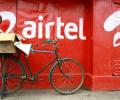
This is the biggest equity-raising exercise by an Indian corporate within a financial year. The fundraising - led by Citibank, Goldman, Kotak and Axis Capital as bankers - will see participation by foreign and domestic institutional investors.

Thanks to the recapitalisation by the government and measures taken by the central bank, collapse of any large housing finance company won't pose as big a risk as it had six months ago.

Richest 10 account for 41% of promoter wealth, up from 33% in December 2018, says Krishna Kant.

The Sensex is on course to ending calendar year (CY) 2019 at a price-earnings (P/E) multiple of 29x, the highest in 25 years. Current valuations are, however, lower than those seen in the early 1990s. The Sensex has risen close to 14 per cent in the last 12 months, while the index underlying EPS dropped 6.7 per cent during the period.

RTGS is used to transfer large sums, the minimum amount being Rs 2 lakh. This mode is used primarily to facilitate trade and market transactions. The primary beneficiary would be the capital markets.
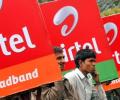
The company has a valuation of Rs 2.22 trillion, up from Rs 1.33 trillion a year ago.

Collapse of the mobile operator could translate into total loss of nearly Rs 44,000 crore for the AV Birla group.
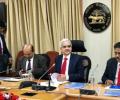
'Overall, domestic demand has moderated significantly. 'The weakening of private consumption, which for long has been the bedrock of aggregate demand, in particular, is a matter of concern,' RBI Governor Shaktikanta Das said in the MPC meetings, in October.

The interest offered is mostly 0.5 to 1 per cent more than what other banks offer. Moreover, customer service and long-term association spanning generations are also other reasons for the popularity.

Only when the RBI inspection started on September 19 did they realise that their game was up and one of them had sent a letter to the central bank, leading to the RBI crackdown, report Anup Roy and Subrata Panda.
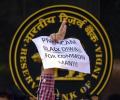
Business activity contracted in Q2 FY20, the first contraction since 2013-14 and the second since the 2008 global financial crisis, report, Abhishek Waghmare and Anup Roy.

Payment aggregators should have a minimum net worth of Rs 100 crore and if they don't manage to arrange that money within one year of putting out final guidelines, they should stop doing their business, says central bank's draft paper.

After the latest spike in crude oil prices, petrol prices could potentially go up to around Rs 90 a litre making a dent in the consumer's wallet. This, the analysts fear, will push the cost of vehicle ownership in the country, further reducing the demand potential for the industry.

In Friday's market rally post the corporate tax cut, the country's top business promoters recouped more than two-thirds of the losses that they suffered in the post-Budget sell-off in equity markets.

The rise in bond yields would make it difficult for banks to pass on rate cuts as except for retail loans, most of their legacy portfolio are linked to marginal cost based lending rate, which takes into consideration bond yields.
 © 2026 Rediff.com - Investor Information - Advertise with us - Disclaimer - Privacy Policy - Sitemap - Feedback - About us - Terms of use - Grievances